• Home
  • Origins & Superpowers
  • CONTACT ME
  • The Moore Bookstore
  • Vanessa Moore Consulting: Moore 4 U
  • My Shelf Indulgences
  • MERCH
    • I Want to Be Loved
  • Community
    • Black Icons Book Club
  • Random Thoughts of a Black Love Connoisseur
  • WIPs
    • All the Wrong Reasons
  • Photo Gallery
  Vanessa Moore LLC

Not always romantic

I told you all I write Black love, not Black romance, because love isn't always romantic. And it really isn't. Love is like wine. There's different flavors, each to be paired with something different, its appropriateness based on season and occasion, layered with different notes, appealing to different individuals. With that said, I hope you enjoy the random thoughts I'll share in this blog, for they are all notes in the different flavors of love.

Whassup With the African Braid Shops?

10/12/2026

0 Comments

 
Picture
​I started going to African Braid Shops back in 2001. I’d just graduated from high school and cut off all my hair for prom. Summer came around, and everybody was rocking cornrows like the singer Lil Mo. I wanted cornrows too, but my mother was my hair-braider, and she could not grip the inch of hair on my head to successfully braid me down. So I ventured to the Mecca of African braiders—East 125th Street in Harlem. There I met Barry. If this blog somehow gets around to her, girl, you were the best. Barry was able to grip my short strands, and she remained my go-to person for about two years. Since then, I’d become a regular at a few African braid shops. As someone who suffers from anxiety and claustrophobia, traveling from The Bronx to 125th Street became tedious and exhausting, and that is how I started discovering and meeting other braiders in The Bronx.
Between 2003 and 2005, I was going to a braider on Castle Hill in The Bronx. She had a small shop, in which she was the only braider, and she sold other products like shea butter and black soap. She also maintained dreadlocks. I was with my daughter’s father at the time, who’d just locked his hair. He and my daughter have an opposite hair texture from mine. Their hair is thick and coarse, with really tight kinks to it. I often refer to mine as “cotton and lace,” because it’s super fine and super soft. This Castle Hill braider once said to me flat out, “Your hair no good for braid. Your husband and your baby, very good for braid. But not you.” I still tell the story because she still took my money and still braided my hair.
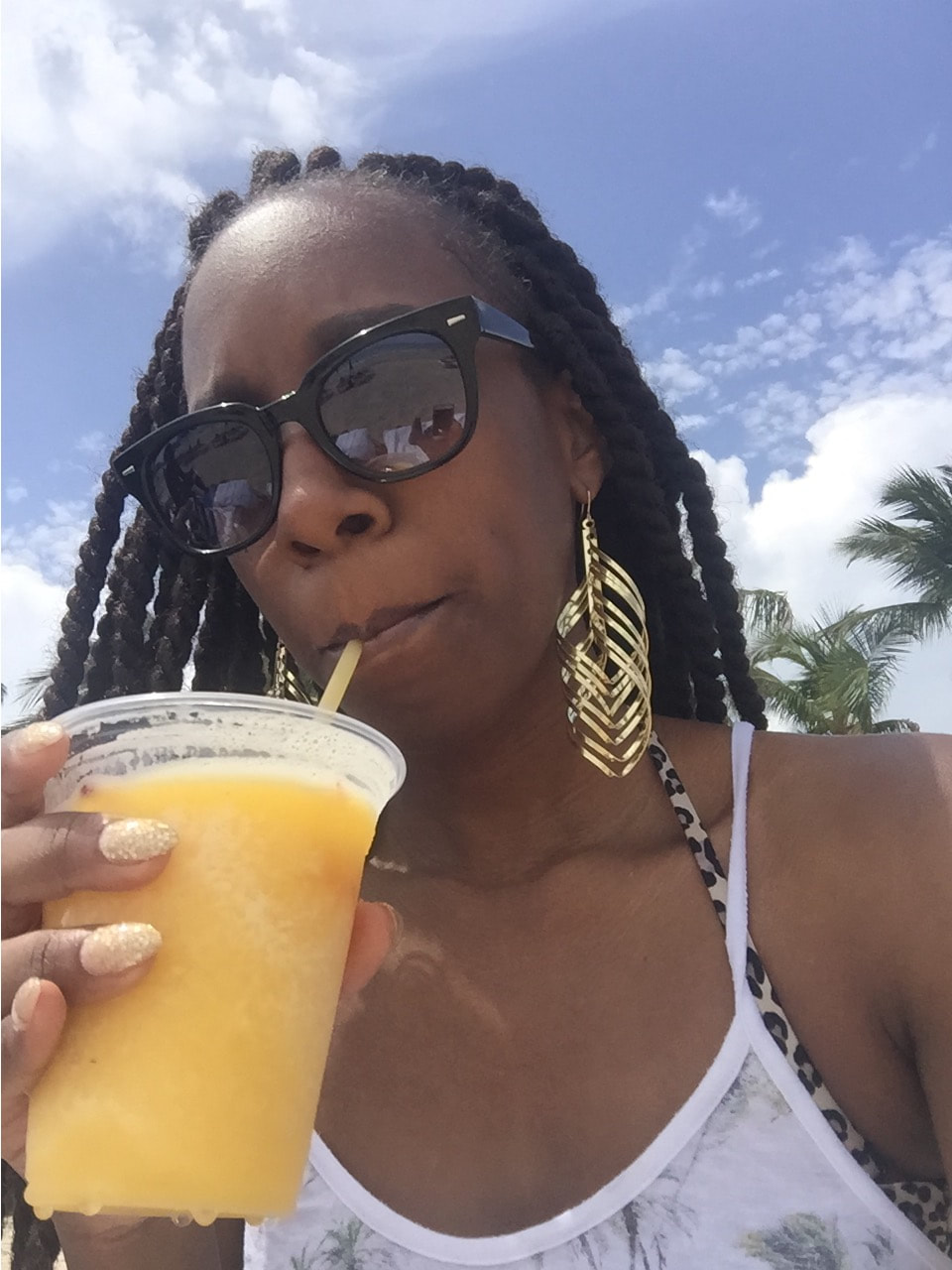
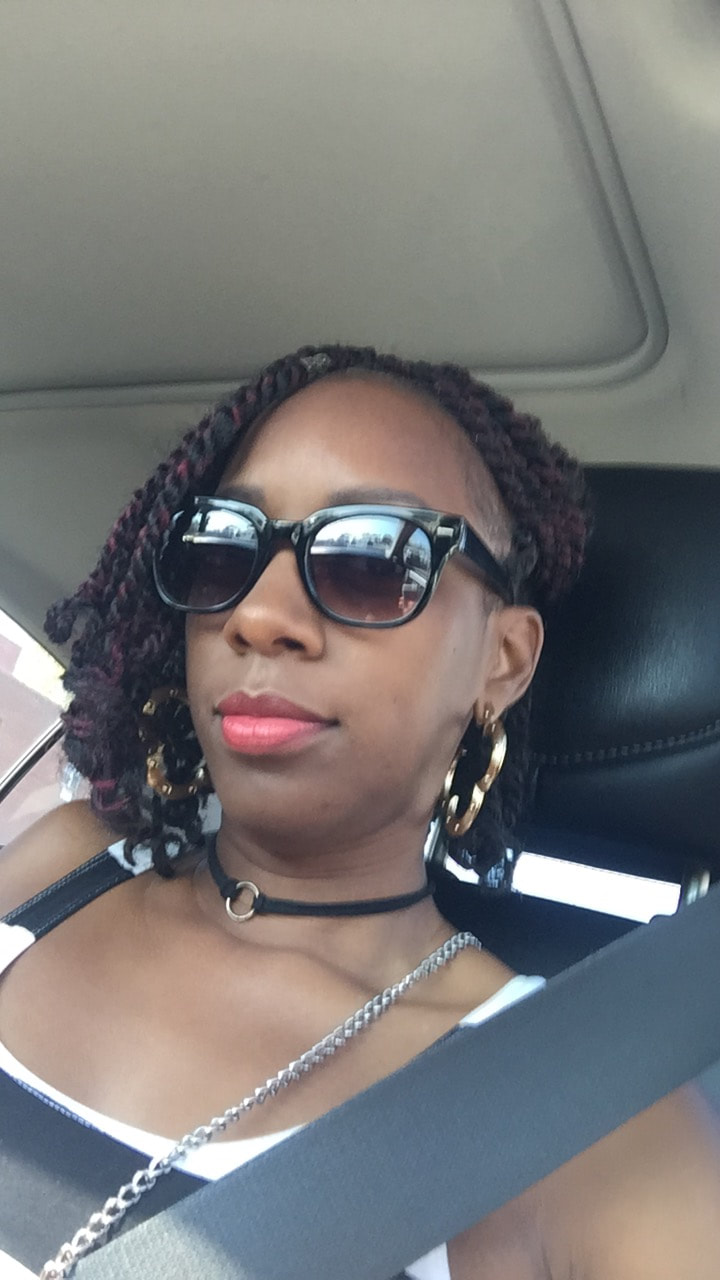
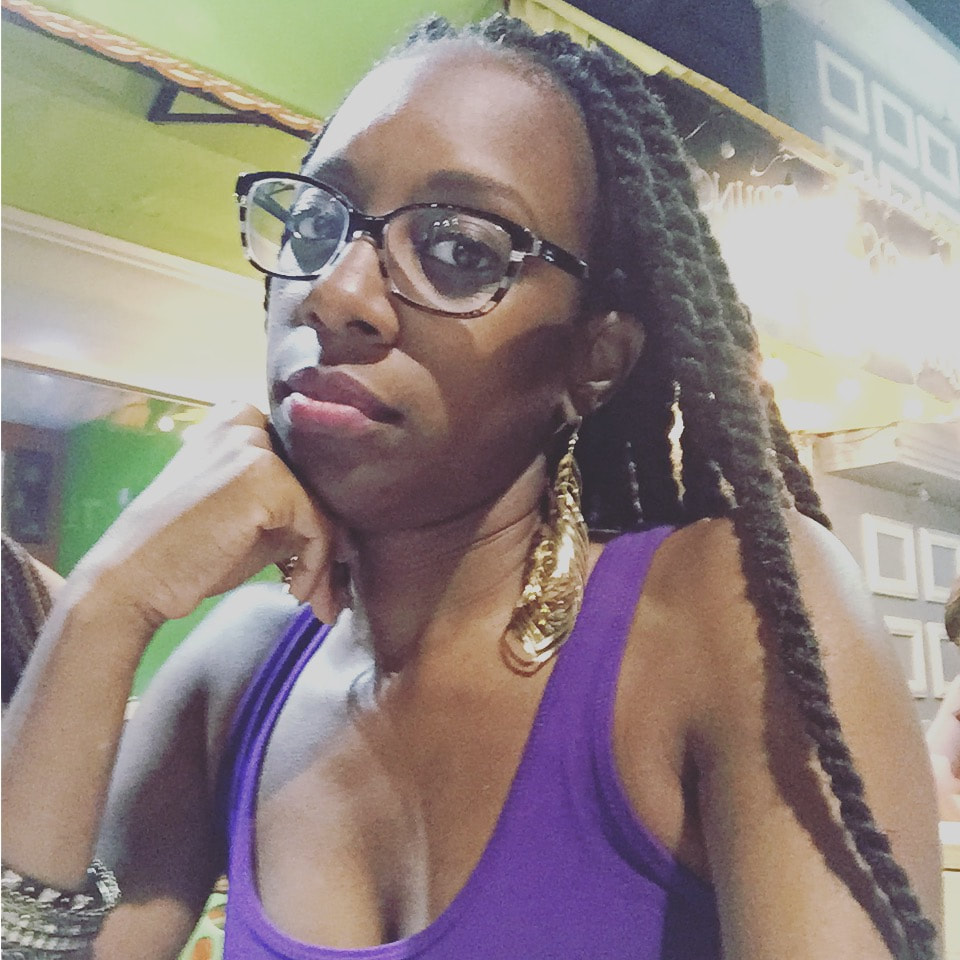
In 2017, I started going to another shop on Castle Hill for Marley and kinky twists. I loved how I looked with the thick rope twists, but eventually learned that the hair used for the style was not good for my cotton & lace strands at all. I lived in a little bit of denial before coming to that conclusion, and before I completely gave up on using that kind of hair, I was getting smaller, shorter twists. I noticed that the twists around the perimeter, edges of my hair, didn’t last more than a day or two. The synthetic hair would slide off my hair, taking some of my strands with it. One day, while getting my hair twisted, I asked the braider to use less hair for the section she parted or make the parts bigger. I said, “I think that’s too much hair for the section. When I go home, the hair is gonna slide right off.”
She said, “No, it’s not.”
I said, “It happens all the time. I think you should use less hair, or make the parts bigger. Or you could even leave it out completely, and I’ll just brush it down.”
She took this attitude like, you’re telling me what to do as the braider? She said, “I know what to do. It’s not coming out.” Then she proceeded to do exactly what I asked her not to do. The next morning, the twists slid out, and of course, some of my hair was stuck in them.
Picture
Now, African braiders have long had a reputation for creating immaculate braid styles, and the trade-off was how intensely they braided. Black-American women took “beauty is pain” to another level; sitting in these hot, sweaty shops, with women yelling over our heads in another language, jerking our skulls left and right, and pinching our scalps to the point of long-lasting pain and damaged roots and hair shafts.
 
I don’t know exactly when Black-American women became especially steeped in our hair care over how our hair looked, but when that happened, we started showing up to braid shops with standards. Some braiders and shop owners complied to keep their clientele, and others don’t seem to care.  
In 2020, when entrepreneurship soared, many women took the time to elevate their braiding skills to that of the famous African braid shops. Now, there are just as many Black-American braiders as African braiders, and there is real competition. I’ve noticed some changes in the shops, but from a distance, because I started to rely on Black-American braiders such as my niece and my sister.
Picture
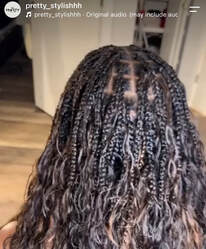
Stolen from my sister's page. Excellently done human hair knotless boho braids.
I no longer live in The Bronx, where my sister and niece both live, and where I know how to find everything I need. I am now in Essex County, New Jersey, trying to find my way around my beauty maintenance. I do still mostly drive back across the bridge to my sister, but she didn’t have availability this past weekend, so I took a chance on an African shop in Orange.
Well…
 
So I Googled African hair braiders and came across this place in Orange that appeared a little more upscale than what African braid shops were like in the past. They also had the highest ratings in the area on Google. I figured, based on those two details, the customer service would be better than past experiences as well. Assumptions do what now? Yeah… so, on the website it says “We take walk-ins all day,” but then they also suggest that you call before arriving, I guess, to get an idea of potential wait time. I did that. I called, and whoever answered the phone acted like I was bothering her. It sounded like she was on the verge of saying, “We take walk-ins; why are you calling?” So I reminded her that the website said to call in advance. She was pretty much like, “Yeah, okay. You coming or not?” So I said I would be there shortly.
 
I get there and the shop looked as I expected: spacious, clean, and comfortable. That was cool. The woman at the front sent me to another lady’s chair. That lady asks me about hair color. I asked if they had 2.
She said, “No. 1b.”
Then I took my hat off, and she goes, “We have 4.”
I said, “That’s fine. Can we mix it with something lighter as well?”
She showed me a few different shades of blonde; I chose one, and then she directed me back to her chair. I got comfortable, and then she said, “I’m gonna take lunch now. I’m going to eat. I’ll come right back.”
In my head, I’m like, “WHAT?!” When I got there, she was chillin in her chair! It’s not like I walked in and she was on her way to the back, in the back, or eating. Ya girl was feet up in the chair, chillaxin’!
All I could say was, “Okay,” because I was desperate. I had a wedding to attend, and I was not up to manipulating my own hair, plus an extension, into some kind of elegant bun or ponytail. I was also not interested in disappointing myself if the style didn’t come out right. 
 
After about twenty minutes, she returns and gets started. I was happy to see she had a wide-toothed comb and did not proceed to rake my head with a tiny-toothed rat-tail comb or something. But then she started that first braid, and I thought I was going to die. I was immediately taken back to 2001, the first time I had my hair braided in a shop, and I only had an inch of hair on my head. At that time, a tight grip was necessary. My hair is now at its normal average length, somewhere between my collarbone and shoulders. (I’m also in desperate need of a trim.) She parted carefully, applied braid gel, and then proceeded to grip my hair as if it were tiny ants trying to escape her. Just as she began the second braid, I said, “The first braid feels a little tight, and it hurts.”
She said, “Oh, you don’t want it tight?”
I said, “No.”
I kid you not, she braided tighter on the second braid. I’m thinking, “What the entire fuck? Is she slow? I know she heard what I said.”
After a while, other braiders came to help her, and for some reason, that’s when she loosened her grip. I thought the other braiders were my saving grace until they all started talking to each other at full volume, over my head. I don’t know what language they spoke. Unfortunately, for all the braid shops I’ve been to and all the African students I taught, I have not learned to decipher the languages and dialects. That’s not to say that if they were speaking English, it would’ve been better for me. Three women shouting at each other and pulling your head in three different directions is overstimulating in any language. By the time they began working on the back of my head, I wanted to FaceTime my little sister crying like, “Gurl, save me!”
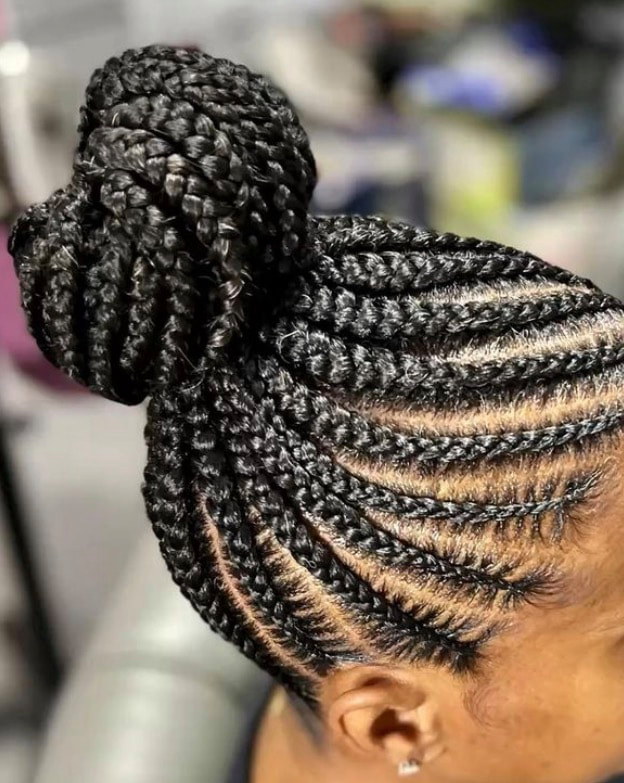
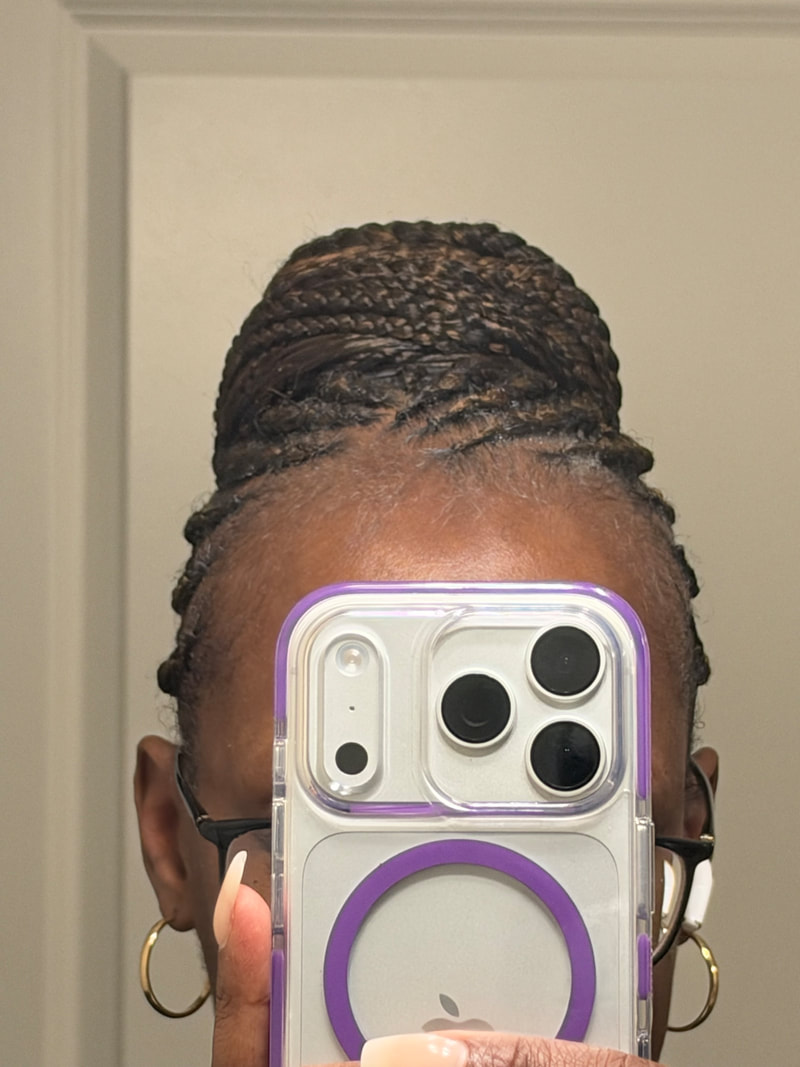
​When I left, my head was heavy and throbbing; an experience I haven’t had in almost a decade, and the style was mediocre. The braids were in the shape and direction I wanted, but they were not knotless or stitched like the picture I showed the braider. The best thing about the whole experience was not having to do my hair the day of the wedding. I took Tylenol when I got home and sprayed an abundance of Kaleidoscope braid spray on my hairline. I also massaged the front of my head with one of Back & Lather’s oils, because the combination of synthetic hair with extreme pulling is a recipe for disaster on already thin hair.
 
I told this whole story to come to these questions: Whassup with African braiders? What’s really good? Why can’t we come to a shop and receive both efficient customer service as well as consideration and hair care? Why do we have to sacrifice those things? Why do your customers have to feel as if they’ve been assaulted when they leave your shop, either physically or verbally?
 
I am legitimately curious. My hair has been braided beautifully by my mother and aunt and later my niece and sister, without them pulling my cotton and lace strands like the strings of a corset. So I know the style doesn’t need all that to be successful. You’re no longer cornering the market in terms of braiding, sooo… why not consider incorporating better treatment of your clients? Don’t argue with them about their hair type or color. Acquiesce when they ask you to consider what’s needed to maintain their hair care. Be a little more considerate when chatting with your shop mates.
 
Although I put all of this out there, I won’t be going back. I’ll be making an effort to secure appointments in advance with my sister. My cotton-lace coif was not made to withstand such abuse in the name of beauty.
0 Comments


Leave a Reply.

    Archives

    October 2026
    September 2026
    November 2025
    October 2025
    July 2025
    May 2025
    November 2024
    October 2024

    Categories

    All

    RSS Feed

Site Designed by Twin Lenses
  • Home
  • Origins & Superpowers
  • CONTACT ME
  • The Moore Bookstore
  • Vanessa Moore Consulting: Moore 4 U
  • My Shelf Indulgences
  • MERCH
    • I Want to Be Loved
  • Community
    • Black Icons Book Club
  • Random Thoughts of a Black Love Connoisseur
  • WIPs
    • All the Wrong Reasons
  • Photo Gallery